Showing posts with label Sweets. Show all posts

Tuesday, 6 May 2014

Palada Pradhaman the name says it all, its similar how you make the Ada Pradhaman. The difference is you make that with the jaggery and here we use the milk instead, its similar to how you make a simple semiya payasam. Its one of a very famous dessert served in most temples in Kerala and even served at weddings. The taste is really incredible that we have it at home with the Boli( a kerala dessert). The making is very simple as its not as lengthy as how you made the Ada Pradhaman. I really love the one which i tasted in "Padmanaba Swamy"  temple at Trivandrum. Omg! its just awesome,if anyone visiting that temple, do not forget to get that prasadam from the temple.

As I really wanted it simple and fast, I used the ready made ada which is store brought, but I used the small ones for making Palada Pradhaman remember it makes difference.The traditional method involves in two ways either by making it in uruli( a broad thick vessel) or in a pressure cooker. The one I made is the pressure cooker method. Which is easy and time consuming as well. Just one thing to make sure is if you are using the store brought ada always remember to wash and soak in hot water for about 10 minutes before you are getting into action :)


Ingredients:

  • Ready made Rice Ada- 1 Cup
  • Milk- 5 Cups
  • Sugar- 2 Cups
  • Cardamom Powder- 1/2 Tspn
  • Ghee- 2 Tspn
  • Condensed Milk/Milk Maid- 3 Tspn
  • Cashews- few(optional)
  • Raisins- Few(optional)

Method:

  • Wash and soak the ada hot water for at least 10 minutes.
  • Cook the ada in water of 2 cups and cook until it becomes soft.Drain and keep aside.
  • In a pressure cooker, add the ghee,when it melts add the sugar and keep until its melted completely.
  • Add the milk and the cooked ada and cook for 1 whistle.
  • Open the lid and cook uncovered for another 20-30 minutes until it becomes thick.
  • Add the condensed milk/milk maid and cardamom powder to it and stir for 2 minutes.
  • Fry the cashews and raisins separately in ghee and add it to the payasam.

Tips:
"Usually in the traditional method, cashews and raisins are not used, so adding that is complete optional.

Adding condensed milk will give a good taste however its optional too.

Adjust the sugar as per your requirement, you can add the extra sugar at any point."


Tuesday, 15 April 2014

I wish all my dearest readers a very happy vishu :) Its been always fun that I spent with my family in India for Vishu and I miss those days. Next to vishu kani, comes the sadya, the last and the best dish served in the sadya would be a perfect Payisam, and if its a Ada pradaman then it makes the day fulfilled. Its a little tedious not with the ingredients but with the time it takes. Either you could try with a readymade palada or you can make it at home too. Readymade adas are nowadays available in markets and it makes it easy.

Always remember to soak the palada for at least 10 mins in hot water so that it cooks well. Other ingredients includes just the jaggery and the coconut milk and you are all set for the making. Ada pradaman is actually made with two different kinds, one with the jaggery and the other one with milk and sugar. The recipe which I made is by the jaggery and soon will catch you with the milk recipe too which is named as palada pradaman. As like other payisam you have to first set with the three kinds of coconut milk which is onnaam paal(1st extract), rendaam paal(2nd extract) and then the munaam paal(3rd extract) which is very important. Here you go with the making. 


Ingredients:

  • Ada - 1 Cup
  • Sabudana(Soaked for 2- 3 hours) and pressure cooked- 1 Cup
  • Coconut Milk as follows
  • Thick coconut milk-Onaam Paal(1st extract)- 1 Cup
  • Rendaam paal(2nd Extract)- 1 Cup
  • Muunaam Paal(3rd Extract)- 1 Cup
  • Jaggery-250 grams
  • Cashews and Raisins- 1/4 Cup
  • Ghee- 5 Tspn

Method:

  • Cook the readymade ada in the water until it turns soft. Filter it and keep aside.
  • In a big heavy bottomed vessel, add the ghee once it becomes hot, add the jaggery and stir well until it becomes thick.
  • Add the cooked ada to that and stir again to combine well.
  • Add the muunam paal and stir occasionally until it becomes thick.
  • Now add the rendaam paal and again stir occasionally until it becomes thick.
  • Add the cooked sabudana and add the onnaam pawl and stir continuously until it becomes thick.
  • In a separate pan, add little ghee and roast the cashews and raisins and add those to the payisam.
  • Add the crushed cardamom and serve.


Tips:
"After adding the 1st and 2nd milk stir occasionally, however be careful not to burn at the bottom and thats why we use a uruli( a thick bottomed vessel used in kerala for making payisam).

If you need more sweet, then you can add it in any point to the payisam while cooking.

Always use fresh coconuts for making payisam and its better if you do not use the frozen or packed coconuts."


Tuesday, 21 January 2014

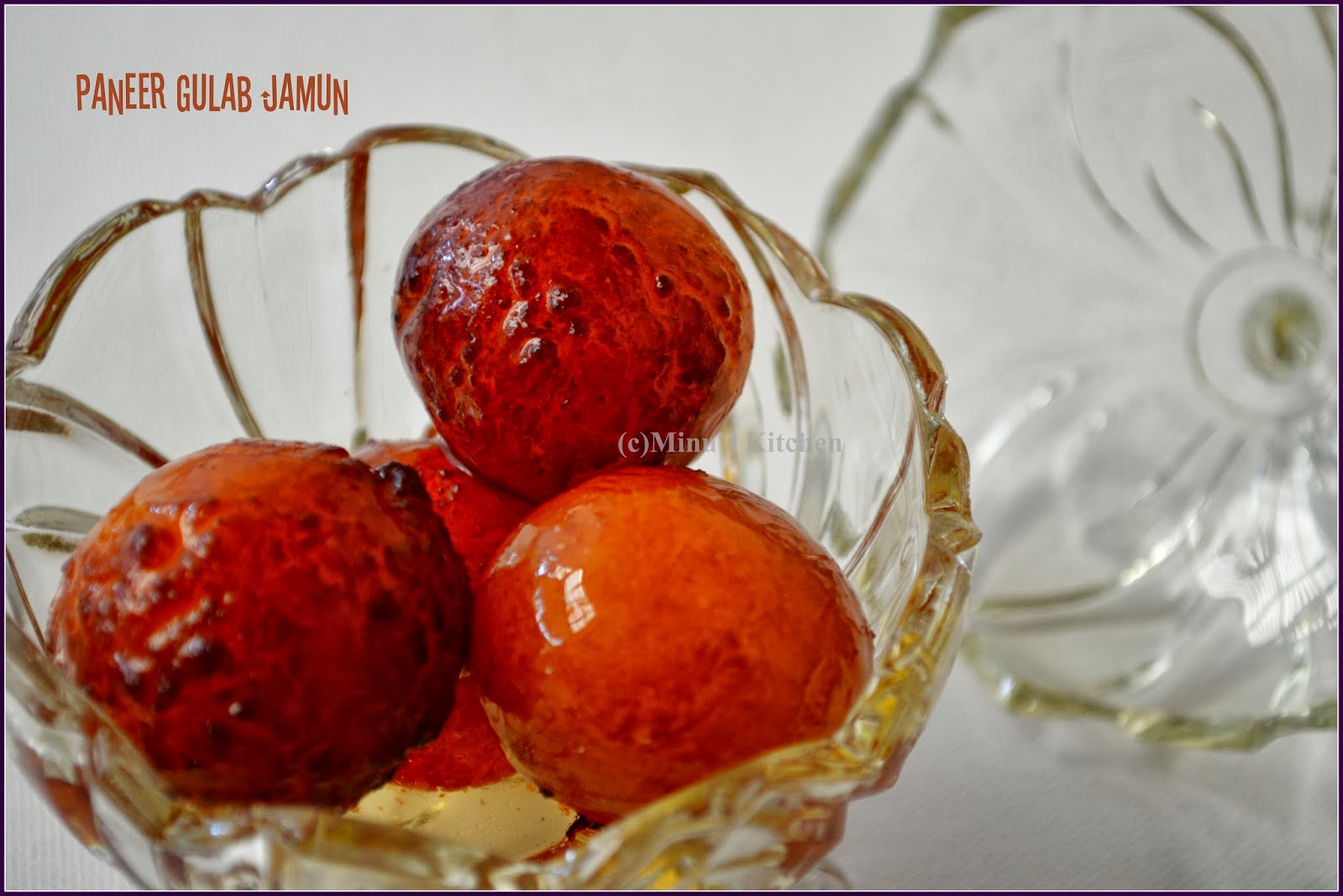
I bet anyone who tasted a gulab jamun would fall in love again and again with it and I don’t think I have any more to write here. It’s a fact that most of the housewives makes it for celebrations however only few gets the right texture.Some of the common wrong factors would be like smaller in size, not baked completely at the center of it or the softness. To make perfect jamuns there are two options one,by the readymade gulab jamun mix or with help of homemade paneer. I would take the second choice as my preference because, it tastes great than you prepare with the readymade mix.

Last year, when I posted the Rasa Gulla recipe , I never thought I can make a better paneer gulab jamun too :) My BF is a big time lover of gulab jamuns and I make for him often and its tastes heavenly when you mix it with ice cream too. Every time I make I get the same taste because of the homemade paneer. You can check how to make the homemade paneer at Rasa Gulla. Again, it’s your choice if you like to go with the store bought paneer or a homemade. Here you go with the making.


Ingredients:

  • Paneer( Kept at room temperature)- 1 cup
  • Maida/All-purpose Flour - 2.5 Tspn
  • Baking Soda - 1/4 Tspn
  • Pistachios or cashews - 1/2 Tspn chopped
  • Cardamom Powder- ¼ Tspn
  • Milk- 3 Tspn
  • Water- As needed
  • Ghee/Oil - To deep fry.
 
YOU CAN SKIP ALL THE ABOVE DRY INGREDIENTS IF USING A READY MADE GULAB JAMUN MIX

For the Sugar Syrup:

  • Sugar - 1 heaped cup
  • Water - 1 cup
  • Saffron - few
  • Rose Essence - 2 drops


Method:

To Make Sugar Syrup:


  • Add the water and sugar and boil at high flame for about 10 minutes, after 10 mins, reduce the flame to medium flame and let it stand in the flame for 10 more minutes.
  • Bring it to the texture that it should stick between two fingers firmly.
  • Add the rose essence and switch off the flame and let it cool completely.
To Make Jamun:

  • Kneed the paneer to fine powder.
  • Add the maida or all-purpose flour, baking soda, cardamom powder and kneed gently by adding the milk and sufficient water to make smooth soft dough.
  • Cover it and keep it for about 10 minutes for the dough to set.
  • Now, make small balls out of the dough with little pressure to prevent breakage.
  • In a boiling ghee or oil, add the paneer balls and fry until it becomes golden brown.
  • Transfer to a paper towel and set dry.
  • After it’s cooled down completely, dip the balls to the cooled sugar syrup.
  • Spread the chopped cashews/ Pistachios to it and let it stand for at least an hour.

 
Tips:

"Do not add the jamun immediately to the sugar syrup after you keep deep fry.

While kneading the dough, add adequate water, if the water is not appropriately used it may break.

Do not fry the paneer for more time in the oil as it may turn hard.

Make sure you have adequate sugar syrup for the jamun, as it will absorb immediately.

You can store in the jamun in the refrigerator for a week also.

While kneading the dough, touch your fingers with oil or ghee to prevent sticking."


Friday, 13 December 2013

Kinnathappam is very popular traditional sweet cake widely prepared in North Malabar especially in Kannur. Kinnam refers to a shallow copper or steel vessel in malayalam. It’s one of a mouthwatering recipe as it is prepared out of rice grounded with coconut milk with mix of ghee and sugar gives you a ultimate treat for your taste buds. This is the first time I prepared it and it turned out so tasty. It may look tedious but it’s very simple to make and serve. The traditional way of making a Kinnathappam is in a uruli or a bronze vessel. But unfortunately I don’t have any of these here with me. I tried with the round baking tray. So if you have any of those then you are good to do.

Some may not use egg in it, but the version I made has egg in it, which gives you an extra taste and it makes the Appam spongier as well. You can grind the rice in mixie/blender however if you do it in grinder it gives you the best result.It is one of a favorite dish which is often made in Malabar families. This has two different versions one with a jaggery and other with sugar, The one I presented here is the sugar kinnathappam. I am very excited to present you all this unique Malabar recipe for my readers hope you all try and like it too.


Ingredients:

  • Raw Rice- 1 Cup
  • Sugar- 1 1/2 Cup
  • Coconut Milk-Thick Milk (Onnaam Paal)- 2 Cups
  • Crushed cardamom- few
  • Cumin seeds- 1 Tspn
  • Egg- 1
  • Ghee- 2-3 Tspn.


Method:

  • Soak the raw rice for atleast 5 hours and grind it to fine paste adding 1 cup of coconut milk and keep it separate.
  • In a blender, add egg,sugar and another 1 cup of coconut milk and blend it well.
  • Add the blended egg mixture to the rice paste and mix well.
  • Add the crushed cardamom and pour it to the pan.After pouring to the pan sprinkle the cumin seeds to it and keep it in steamer (use idly cooker if you have) for 20 minutes.
  • Check after 20 minutes by pricking a toothpick at the center to it, if it comes out clean then its done. After it set cool transfer to a plate.


Tips:
"While grinding the rice, do not pour the coconut milk all at once; instead add it in regular intervals.

Steaming time may differ, hence check at regularly while its steaming."


Friday, 1 November 2013

I know most of you would have done with all your sweet preparation, how fun it would be to spending time with family friends, sharing sweets, oil bath, crackers :) I really miss my family.. wish I could make it atleast next year.. this post is for someone who still looking to prepare some snacks..Kara sev is the most easiest snack to make and it’s a favourite for most of the people.


My Amma likes kara sev very much and she was much surprised when she heard that I made it rite. Those days they use to make kara sev out of the big ladle holes, but I just tried making it by the three hole idiyappam press which I have which made my job very easy as well. Store the kara sev in a air tight container so that the pepper and asafetida will mix up well and gives a good flavor to it. Here you go with the making. I wish all my readers a very happy diwali :)


Ingredients:
  • Gram Flour- 1 Cup
  • Rice Flour- ¾ Cup
  • Turmeric Piwder- a pinch
  • Asafoetida- ¼ Tspn
  • Cumin Seeds- ¼ Tspn
  • Pepper grinded coarsely-1/2 Tspn
  • Salt- To Taste
  • Butter- 2 Tspn
  • Oil- For Frying


Method:

  • Melt butter and mix with all the powders with enough water and to make a stiff dough.
  • With the help of three hole muruku press gently the dough into the hot oil.
Tips:
"Make the dough stiff, as if its loose, it may not come out properly from the hole."

Tuesday, 29 October 2013

Yay! Its diwali time, I know most of the house wives will be thinking about what to make and impress their families and friends, like me. I wanted to try something, very different and tasty as well and I ended up making my mind to prepare these incredible “Sweet Somas”. Believe me it may look little difficult but when you do it with right measurements; you will get it absolutely fantastic results. I most important factor in making this “Sweet Somas” is the time you keep the dough before you go with the making. I kept the dough for 2 and half hours. I more time you keep the dough, the more fluffy it become while frying. The powder that I prepared for the stuffing can be kept in the refrigerator, as that can be served by itself, especially many kids love by eating by itself.

The most tedious process is bringing the shape, I used poori press to flattern maida, as it may shrink when you do it by hand.It is an excellent sweet to serve on special occasions like diwali, as it is crunchy and you won’t end up just having one or two. Yes feel free to comment how many you ate (lol). I know most of you are very curious to know about my “Diwali Special Post”, I dedicate this to you all. “I wish you and your family a wonderful Diwali”. You still have 4 more days to go, so get yourself prepared to make this Sweet Somas at your Diwali Sweets List.


Ingredients:
  • Maida-1 Cup
  • Corn Flour- 2 Tspn
  • Oil- 2 Tspn
  • Salt- a Pinch
  • Roasted Gram/Potukadalai- ¼ Cup
  • Sugar- ½ Cup
  • Coconut grated- ¼ Cup
  • Cardomom-few
  • Oil- For Frying


Method:

  • Mix Maida, Corn flour, Oil, Salt with approximately ¼ cup of Water and make a soft dough and set aside at least for 2 hours
  • Meanwhile grind Roasted Gram (Pottu kadalai) coarsely and keep aside
  • Grind Sugar along with Cardamom to fine powder and keep aside
  • Dry roast Coconut in a separate pan, just for 2 minutes
  • Mix the all the above grounded powder along with coconut and keep it separate (this serves as a stuffing for Samos)
  • Now,make balls and flattened the Maida dough and keep the stuffing powder at the center as shown below


  • Close the dough a shape of Somas and close the ends tightly
  • Drop the stuffed Somas to the Hot oil and fry until it turns to golden brown and transfer it to a paper towel to set it dry


Notes:

"Make sure to close the flattened dough completely without any opening, as the stuffing may come out while deep frying

You can also use the poori press to flattened it right

Make sure to keep the Somas in a air tight container to stay fresh and crunchy"


Monday, 16 September 2013


Happy Onam to all my readers. Hope you all are having good times with your family :) You may wonder about the picture, it was a just a time pass painting which I made.. thought of clicking a picture of it with my recipe :).Here I come back with the yet another Onam special recipe “Pazham Pradhaman” - Banana Payasam. Onam is not complete with Sadya and Sadya is not complete unless it ends with a tasty payisam. This is my payisam from my Amma’s cookbook after my Chakka Varatti Payasam 


The variety of payisam is the highlight recipe among the entire Kerala cuisines. The kerala banana and the coconut is the asset of making any Kerala sweet recipes. Today I prepared the pradhaman with my Amma’s oral instruction, I wasn’t so sure about the taste when I started doing it.But was surprised and felt so proud when my BF just loved it.. Hope you will also enjoy making it. 


Ingredients:

  • Ripe Bananas(Kerala Banana)- 2 Large
  • Jaggery- 1 Cup
  • Coconut Thick Milk(1st milk)- 1 Cup
  • Coconut Thin Milk(2nd Milk)- 1 Cup
  • Pearl Sago(sabudana)- 1 Cup
  • Coconut pieces- half Cup
  • Cashews/Raisins- Few
  • Powdered Cardomom- Few
  • Ghee- 3 Tspn


Method:

  • Steam cook the banana until its baked well, smash it and keep aside.
  • Soak the Sago for atleast 3 hours, pressure cook it for a whistle and keep aside.
  • In a heavy bottomed pan, add ghee, when it heats up, add the smashed baked banana and sauté well until the banana melts and nicely cooked(sauté for 5 minutes approx).
  • Add the jaggery to the banana and sauté again, until it melts well and completely mixed with the banana.
  • Add the coconut 2nd milk to it and heats up, until the mixture gets thick(approx for 5-10 minutes).
  • After it becomes thick, add the coconut thick milk(1st milk) and boil it again (approx for 3 minutes).
  • Add the cooked sago/sabudana to it and boil it again for 2 minutes.
  • In a separate pan, add ghee, and when it heats up add the coconut pieces, cashew and raisins and sauté until it becomes brown.
  • Add the cashews to the payisam and stir well.
  • Add the powdered cardamom to it and give a stir again.
Tips:
"The exact taste comes only if you use the kerala bananas.

You could adjust the jaggery if you want to reduce or increase the sweet."


Tuesday, 23 July 2013

Thinking for an easy unique desert to serve during festivals?? Your best choice would be Ragi Halwa. As this is Aadi Month, most tamil hindu ladies celebrate the Aadi perukku (Adiperukku is a unique South Indian and specially a Tamil festival celebrated on the 18th day of the Tamil month of Aadi (mid July)). Young women wear new clothes and take a dip in the holy waters of the river and worship Amman. So, here is a unique sweet recipe to celebrate it.


Halwa is a common desert throughout India. There are lot of varieties in that and each halwa is special in each cities say thirunelveli is famous for Halwa in Tamil Nadu. This is a unique dessert made out of ragi flour and it’s healthy too. It’s very easy to make and best when served after it sets completely cool. Here comes the making.

Ingredients:

  • Ragi flour – 1 cup
  • Jaggery powdered – 1 to 1 ½ cup
  • Water – 2 cups
  • Fresh Cream/Thick Milk - 1 cup
  • Ghee – 2 to 3 tablespoons
  • Cardamom powder – ½ teaspoon
  • Cashew nuts – few


Method:

  • In a pan, pour ghee, add ragi flour and fry on medium flame till nice aroma arises from it and keep aside.
  • In a separate pan, add ghee and fry the cashews and keep aside.
  • In a separate pan, add water with the jaggery powder and boil for some time until it thickens, filter it to remove the impurities if any.
  • To the fried ragi, add the jaggery syrup and stir continuously.
  • When it starts thickening, add the fresh cream or milk to it and stir continuously until it becomes thicker.
  • Add the fried cashews and powdered cardamom to it and stir thoroughly.
  • Add a tspn of ghee again to the halwa and stir again.
 

Tips:
"Adding milk is optional. You could skip it if you want to reduce the fat however it adds a good taste to the halwa."


Tuesday, 11 June 2013

Unniappam is one of the pride recipes in Kerala. You could find unniappams in most Iyyapan temples. I would definitely bet no one would miss having it once in their lifetime.I still remember the moments when I receive the prasadam a banana leaf a unniappam and paal payisam in Krishnan temple. My Amma is specialist in preparing the unniappam. I agree that it may not be unique sweet recipe but have you heard about Mambazha Unniappam??? And have you ever tasted this??


It is very easy to make and much tasty as well. All you need is just the ripped mango and wheat flour and a pan(appachati in tamil its paniyara chatti) . I always use to think making the unniappam is really a tedious process, but then after making I realized that was wrong!!! Normally This is made mostly during Vishu festival, however could not stop myself cooking it after I spoke to my Ammuma as she just made it :) Here you go with the making part.

Ingredients:

  • Wheat Flour- ¼ Cup
  • Ripped Mango Pulp- ½ Cup
  • Rava- 1 Tspn
  • Rice Flour- 1 Tspn
  • Elachi powder- ½ Tspn
  • Coconut pieces- few
  • Ghee or Oil- To Roast.


Method:

  • Mix all the ingredients except oil/ghee and coconut pieces in a bowl and make a batter(just like dosa batter)
  • Fry the coconut pieces in ghee and mix the roasted coconut pieces to the batter.
  • Pour oil or ghee in the holes in the pan.
  • After the pan turns heat(keep the flame as low) pour the batter to the oil filled holes.
  • Fry by flipping both the sides.
  • Transfer to a paper towel to remove excess oil and serve hot.


Tips:
"As this recipe has mango pulp it takes a little more to cook the inside part, hence be patience till it cooked nicely by keeping the flame in low.

If the ripped mango you are using is not so sweet you could some sugar to the batter.

It's a recipe which turns a little dark, hence it doesn’t mean that its been over cooked."

Tuesday, 16 April 2013

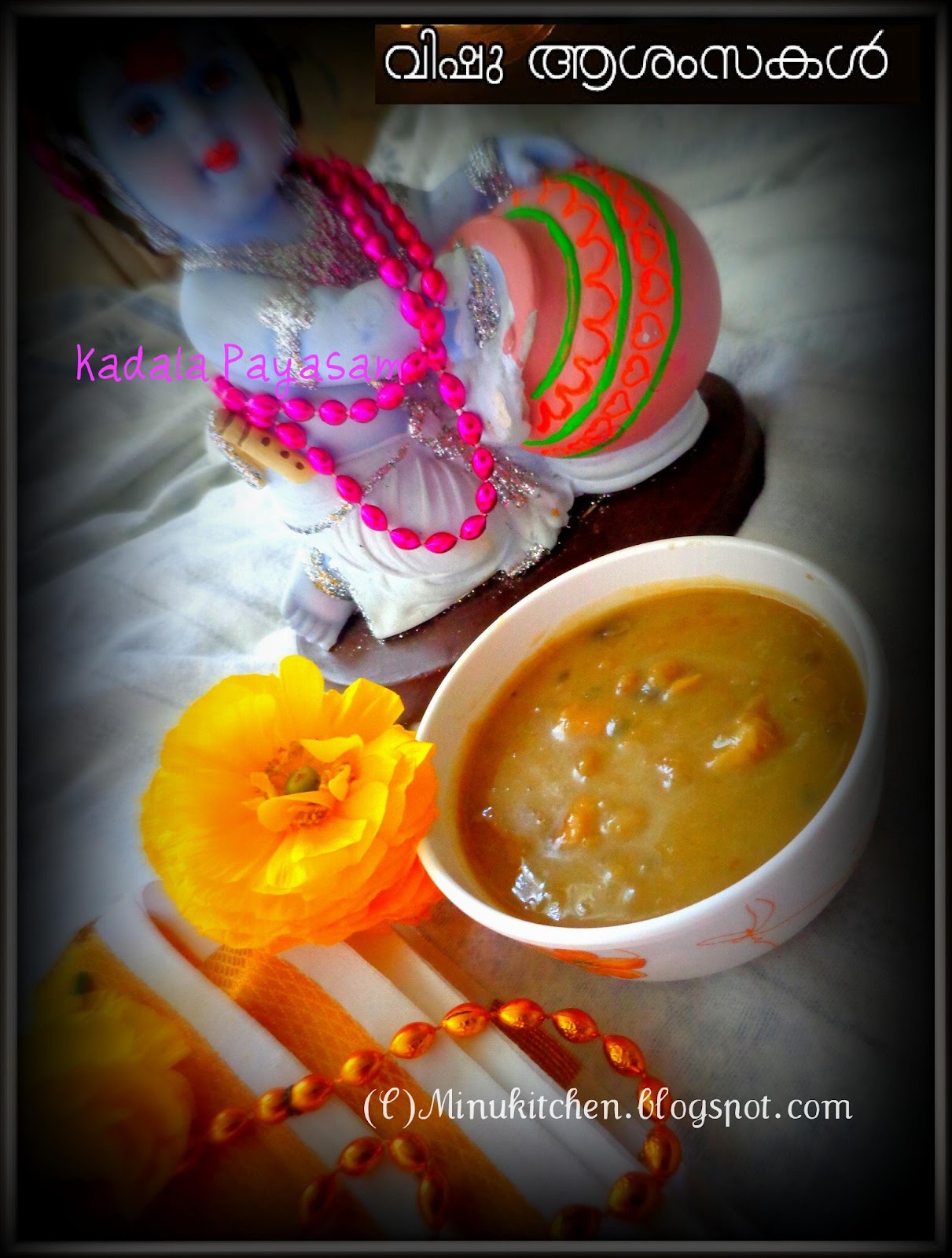
I always carry the wonderful moments with me, the days our whole family together for every year Vishu and Onam!!. On Vishu,the most important thing we do at home is is the Vishukkani, which literally means "the first thing seen on the day of Vishu after waking up". The Vishukkani consists of a ritual arrangement of auspicious articles like vegetables,mirror and the key element is the yellow flowers konna poo (which will bloom only at vishu days), with nilavilakku is also placed alongside. This is arranged the night before Vishu. On Vishu, the custom is to wake up at dawn and go to the puja room with eyes closed so that the Vishukkani is the first sight in the new season.


Interesting is it!!! Yes, the full day will be fun to be with all these and Sadya off’ coarse! In sadya Payasam is the main factor, as I already mentioned about sadya in my Aviyal post. So, for vishu special comes the kadala payasam :)


Ingredients:
  • Channa Dal- 1 Cup
  • Jaggery Powder- 1 Cup
  • Thick coconut milk- ½ Cup
  • Thin Coconut milk- ½ Cup
  • Cashews,raisins- few
  • Coconut cut pieces- 10 pieces.
  • Ghee- 2 Tspn
  • Cardamom Powder- 1 Tspn
  • Pearl Sago/Sabudhana- ½ Cup

Method:

  • Soak the pearl sago in luke warm water for at least 3-4 hours and pressure cooker it for 2 whistles and keep aside.
  • Pressure cooker the channa dal for 4 whistles, Smash it well, remove excess water and keep aside.
  • In a heavy bottomed pan pour the channa dal and stir for about 2-3 minutes.
  • Add the jaggery powder to it and stir again for about 2 minutes
  • The color will slightly get changed, at this point, add the thin coconut milk to it and allow it to boil for some time until the texture becomes thick. Stir continuously.
  • Now, add the pearl sago and the thick coconut milk to this stirring continuously and let it boil until it becomes thicker.
  • In a separate pan, pour ghee and add the cashews, raisins and the coconut pieces and roast until golden brown.
  • Add the roasted cashews to the payasam and add cardamom powder to it.
Tips:

"The coconut pieces should be very thin and should be nicely roasted, which gives the payasam the unique taste.

Stirring is most important to get the right taste and care should be taken as not to burnt at the bottom."
Why not a traditional authentic south Indian sweet to celebrate the Tamil New Year!!and are you confused to make a unique sweet recipe to make during celebrations??

Thiratipaal,is the best option for you in that case, Its one of a very famous and delicious sweet recipe which most of the south Indians love to have it, it just melts in your mouth, with regard to the making its really very simple and easy, if made precisely with the correct measurement and the consistency. If you use the proper cow milk the result will be awesome, however for people who lives in places where you get only get bottled milk the taste will be slightly vary but still we can get the taste of the Thiratipaal. I am very new to make this recipe, and was much excited to see the result and it was awesome when it’s done.


Ingredients:
  • Whole Milk- 0.5 gallon/ 2 Ltr
  • Curd or Vinegar- 2-3 Tspn
  • Brown Sugar- 2 Cups
  • Ghee- 3 Tspn


Method:

  • Boil the milk in medium flame in a heavy bottomed pan and stir occasionally say in every 10 minutes add a tspn of curd or vinegar to it.
  • After some time the milk will start thickening and will start reducing the quantity, now add another tspn of curd or vinegar at that time.
  • Add the curd or vinegar at regular intervals.
  • After the milk is curdled completely raise the flame a little more to dry out the excess water in it, now add the brown sugar and stir continuously.
  • It forms a thick paste now; add the elachi powder and the ghee to it.
Tips:

"Do not add the curd or vinegar at once, as it may not taste good."

Tuesday, 19 March 2013

I am one among the one who hates beetroot but to my wonder I liked beetroot halwa very much, after it’s made when tasted it doesn’t have any essence of beetroot in it and just loved it. Its similar to carrot halwa. Hope you all too love the taste and here is my recipe for it. You could use a food processor to chop so that your job becomes easy.


Ingredients:

  • Beetroot sliced- 2 Cup
  • Sugar- 1 Cup
  • Milk- 2 Cup
  • Ghee- 4 Tspn
  • Cashews-4-5 nos
  • Cardomom powdered- ½ Tspn


 Method:
  1. Heat pan, add the sliced beetroot and sort for 2 minutes just to take off the beetroot raw smell and keep aside.
  2. Pressure cooker the beetroot adding the milk for 1 whistle and cook again opening it for about 10 minutes.
  3. Add sugar to it and sort until it becomes thick.
  4. In a separate pan, heat ghee roast the cashews and add this to the cooked beetroot and mix well.
  5. Add the powdered cardamom and transfer to serving bowl.


Tips:
"Keep the flame low while adding the cashew and cardamom powder to avoid sticking at the bottom.

Always serve after the halwa cools down completely as it gets more thickened."

Monday, 25 February 2013

Kerala is the first and best place where you can taste different types of payasam. This is my first payasam in my blog, will share more shortly. This is also made out of chakka varatti.So if you prepare the chakka varatti you can prepare this payasam very easily. So, here it is.


Ingredients:

  • Chakka Varatti-4-5 Tspn
  • Coconut Thin Milk-1 Cup
  • Coconut thick Milk- ½ Cup
  • Cashews-few
  • Raisins-few
  • Sabudana-half Cup
  • Cardamom crushed-few
  • Ghee-2 Tspn
  • Coconut pieces sliced- few
Method:

  • Soak the sabudana in water for an hour and keep aside.
  • Soak the chakka varatti in the thin coconut milk for about 10 mins.
  • In a broad pan, add the soaked chakka Varatti and stir for few seconds.
  • Add the soaked sabudana and stir for few minutes.
  • Add the thin coconut milk and stir continuously until it becomes thick.
  • Bring the stove to low heat and add the thick coconut milk and stir continuously until it thickens.
  • In a separate pan, add ghee and fry the cashews, raisins and the coconut pieces for few seconds and pour this into the payasam.
  • Garnish with crushed cardamom and serve.


Tips:

"Adjust the flame according to the consistency of the payasam.

If you cannot get sabudana you can skip it.

Coconut milk used should be extracted from the coconut and do not use the coconut powder water."

Elai appam is a recipe made out of chakka varatti. This is very easy to make and made out of banana leaves that’s why it’s called so. Before started doing this the vital part is you need to do set the banana leaves flexible as it may not get folded and it may get tear at the sides of the leaves so to avoid Keep a leaf at a time on the gas flame for few seconds, flipping and turning the leaf so that the leaf is slightly wilted. This step helps in making the parcel easy. Care should be taken as showing directly to the flame may burn the leaves. Doing this, the leaves will turn dark and flexible.


Ingredients:

  • Chakka Varati/Jack fruit jam- 4-5 Tspn
  • Coconut shredded- half Cup
  • Rice flour-half Cup
  • All purpose flour/Maida-Half Cup
  • Salt- ¼ Tspn


Method:


  • Mix the chakka varati and the coconut and keep aside(this is the filling used)
  • Cut the wilted banana leaves (as stated above) to big square shape and keep aside.
  • Make dough of rice flour, salt and Maida adding little water and keep aside.
  • In the wilted leaves, spread the ghee and gently press the dough and make a circle.
  • In center of the circle keep a scoop of the filling and press gently for a small circle.
  • Fold the leaves like a parcel.
  • Keep the parceled leaves into the idly cooker and bake it for about 20 minutes.


Tips:

"The dough should be loose so that it spreads easily into the leaves.

Care should be taken while folding the leaves, so it’s better to pack loosely and transfer immediately into the cooker.

While making the dough touch wet your palms with water often so that it wont stick into your hands."

There is none to be born who hates Jackfruit!!! At my Achan’s hometown we use to get lot of jackfruits especially in the month of jan-feb followed by May and June. It drops often from the trees and can be collected from our doorsteps too. They taste heavenly and now are the Jackfruit season in my place, so thought of sharing some of the unique recipe made out of jack fruit.


The taste of a jackfruit is incredible that too if it made as a jam just think!! Omg here come the most traditional and the tasty dish of Kerala-Chakka Varatti. Jack fruits are rich in taste and it is used in making different dishes in Kerala. The surprising fact of using jackfruit in kerala is even the seeds of jack fruit is also edible and can be used in making curries as well, which I’ll be sharing it very shortly to you all. The making of chakka varatti is not tedious until you make it with proper measures of jaggery. We use to make this varatti in a uruli. It’s a traditional vessel used in Kerala to make most of the payisam. If you don’t have you can use the large broad vessel as I used as I don’t have an uruli here with me :(


This jam can be stored in a air tight container for about 2-3 months in a refrigerator and it can be used in making several dishes like Chakka Varatti payisam, elai appam, unniappam and lot of dishes which I’ll be sharing with you soon. You can have this with bread as like a jam also.


Ingredients:

  • Jack Fruit Pieces- 2 Kgs
  • Jaggery-1 Kg
  • Ghee- 5 Tspn
  • Dried Ginger powder/Chukku-1 Tspn(Optional)
  • Cardomom Powder- 1 Tspn
  • Water- Less than a ¼ Cup

Method:


  • Grind the jack fruit pieces coarsely (Not as a smooth paste) in a blender and keep aside.
  • In a Uruli or a broad pan, pour ghee and add the jack fruit pieces and stir continuously for about 5 minutes until it becomes soft.
  • Now, add the jaggery powder and stir continuously until the color of the jack fruit turns dark brown i.e. from yellow to dark brown usually it will take about 10-15 minutes for that. Below is the picture which is taken in the middle of making it.


  • At one point it becomes very hard and now you can add the dried ginger powder and the cardamom powder and switch off the flame. The way to find the correct texture is pour a scoop of the jam and drop it down and should not fall down easily from the spoon.


  • Let it set cool for some time so that it will becomes tighter and then you could store it in refrigerator in a air tight container as said.